1290 vues
18 Dec 2025
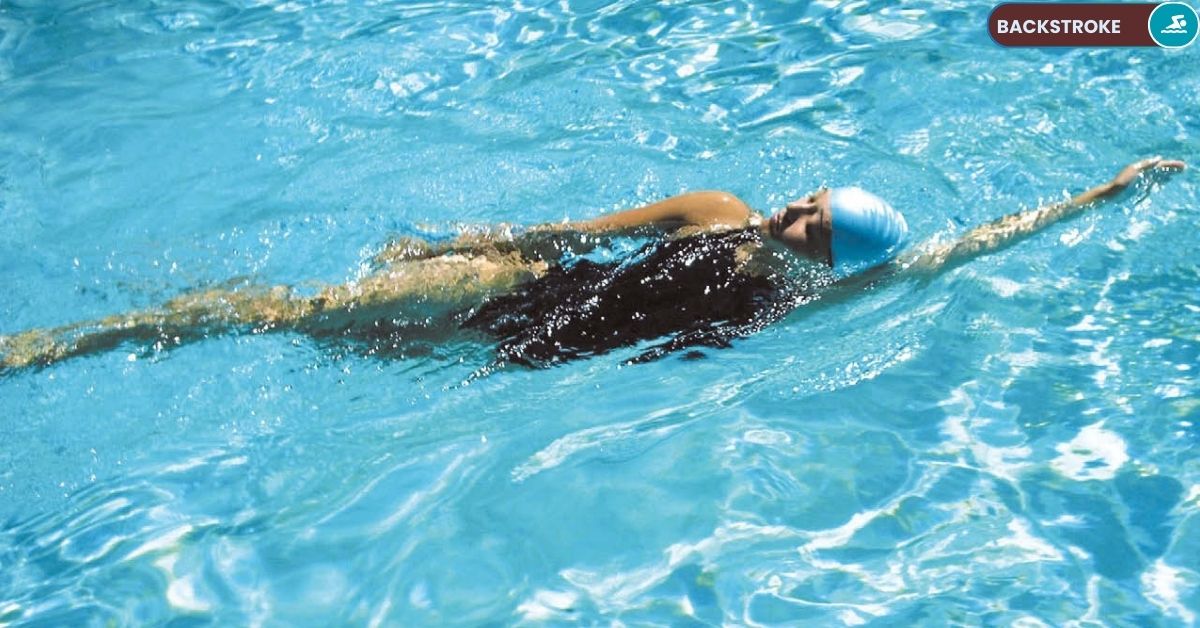
The key to a successful backstroke lies in mastering the unique challenge of balance while floating face-up. Unlike freestyle, where the water supports the chest, backstroke requires the swimmer to find a perfect "horizontal axis" while keeping the face clear for breathing. These Body Position Drills are designed to help you find stability by focusing on the spine and head alignment. By eliminating the common mistakes of "sitting" in the water or arching the back excessively, these exercises teach you how to maintain a streamlined profile and use your core as the foundation for a powerful, relaxed stroke.
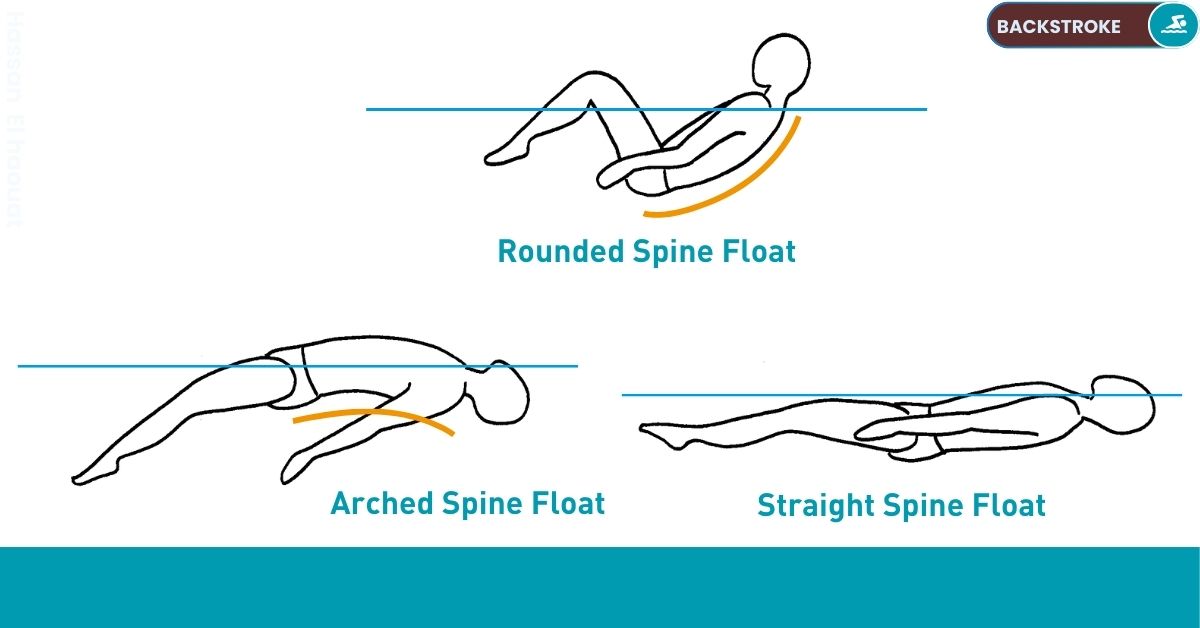
- Drill 26: Float on Spine – This drill explores how spinal alignment affects buoyancy. Swimmers experiment with "sitting" (rounded spine) and "arching" (belly up), noting how both positions cause the face or legs to sink. The goal is to achieve an absolutely straight spine by rotating the pelvis and pressing the back of the head into the water, creating a balanced, horizontal platform.
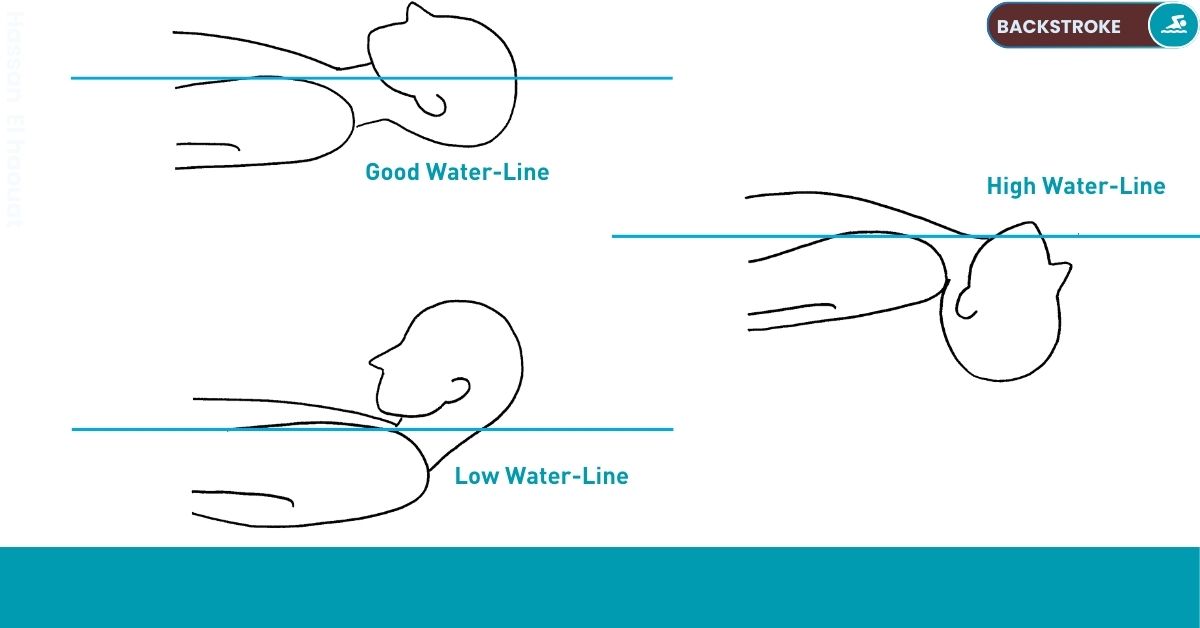
- Drill 27: Water-Line Drill – This exercise focuses on the precise "water-line" around the face to find the ideal head position. Swimmers learn that tucking the chin or tilting the head too far back creates muscle tension and instability. The correct position—looking straight up with a neutral chin—allows the ears to submerge and the neck to relax, similar to resting on a pillow.
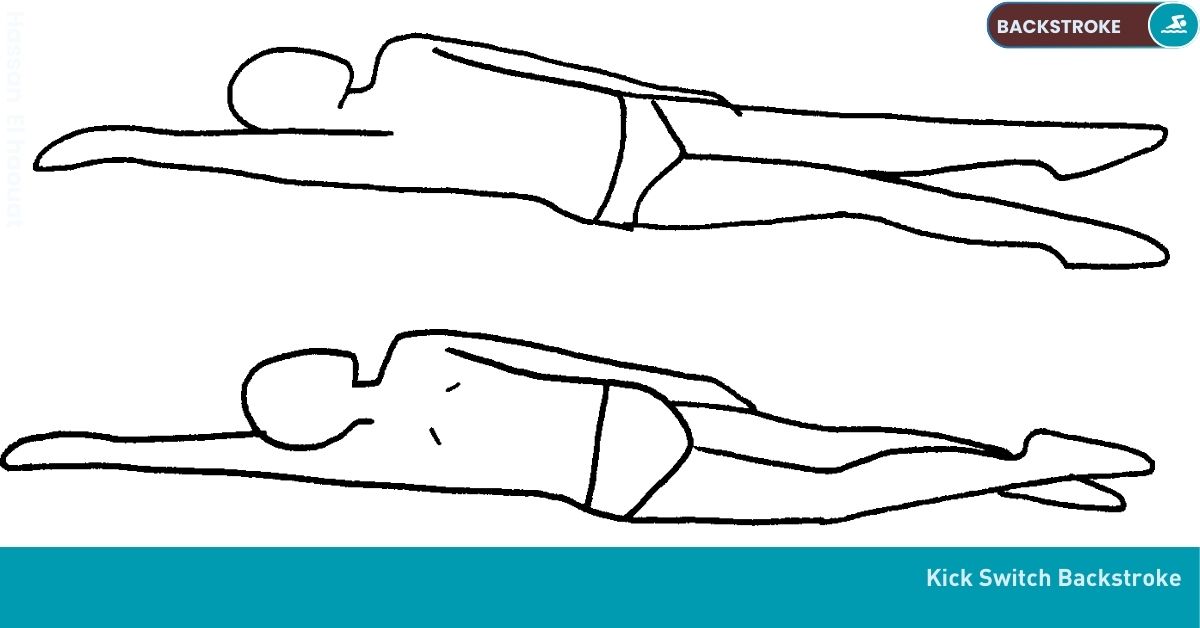
- Drill 28: Twelve Kick Switch Backstroke – This drill introduces movement while maintaining core stability. Floating on one side with one arm extended, the swimmer kicks twelve times before "switching" arms and rotating to the opposite side. It emphasizes keeping the face directed straight up while the shoulders rotate, helping the swimmer identify the longest and most efficient body position.
Backstroke Swimming : - Body Position Drill
Swim Drill - 26 - Float on Spine
THE PURPOSE OF THIS DRILL
- Achieving an advantageous backstroke floating position
- Feeling effective core tension and stability
- Being comfortable on the back
HOW TO DO THIS DRILL
- Step 1: Lay horizontally in the water, face up, without attempting any forward motion, arms at sides, head leading.
- Step 2: Focus on how your spine affects your floatation. First, round your spine so that your knees come up toward your chest, and your hips are low, as if you were sitting in the water. Notice that you have a hard time floating in this position. Your face may even submerge.
- Step 3: Resume your horizontal position in the water, face up. Focus on your spine. Now, arch your back, so your belly button is the highest point of your body. Try to get it above the water. Notice that by doing so your face submerges, or nearly submerges in the water. Your legs may also sink.
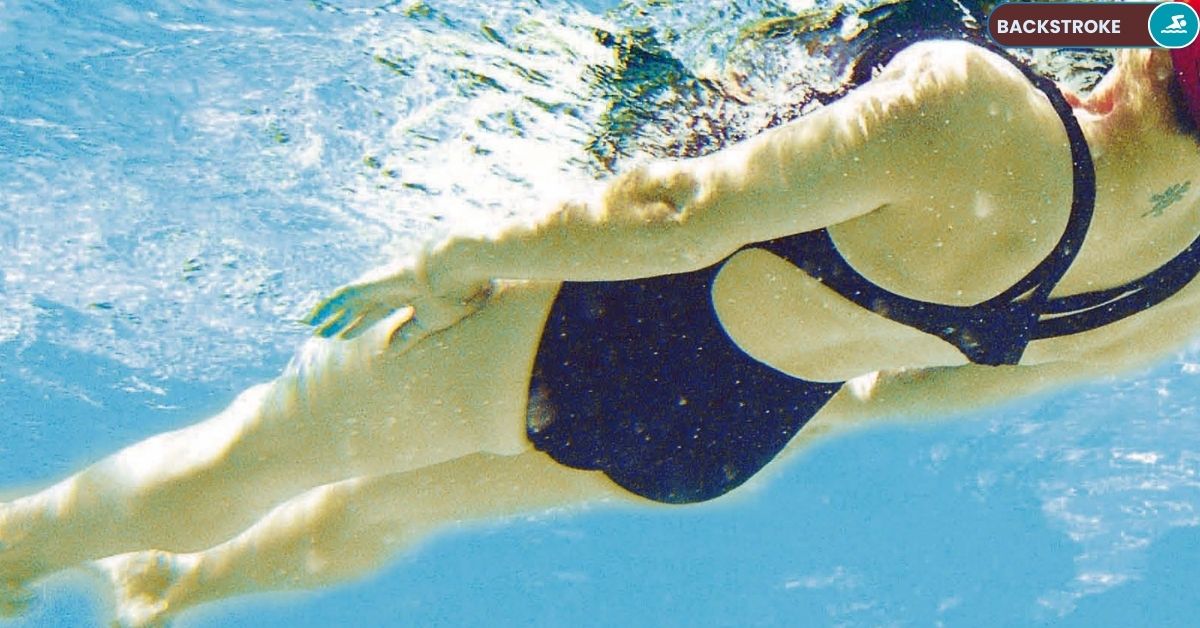
- Step 4: Again lay horizontally in the water, face up. Focus on your spine. Make it as absolutely straight as possible. This includes straightening the natural bends in the small of the back and at the neck. To accomplish this, rotate your pelvis forward, and press the back of your head into the water. Notice that in doing so, you contract your abdominal muscles, and actually relax your neck. Notice too that your body floats more horizontally. This is the advantageous floating position which you can build a good backstroke stroke upon.
- Step 5: Practice several times until you achieve the feeling of balancing on your spine.
Backstroke Swimming : - Body Position Drill
Swim Drill - 27 - Water-Line Drill
THE PURPOSE OF THIS DRILL
- Finding correct head alignment
- Feeling the water-line around your face
- Relaxing the neck, shoulders and upper back
HOW TO DO THIS DRILL
- Step 1: Lay horizontally in the water, face up, arms at sides, spine straight. Do not produce any forward motion.
- Step 2: Now move your chin toward your chest until the surface of the water, or the "water-line" is just below your ear lobes. Notice that in this position, the muscles in your neck and shoulders are fully engaged. Your legs may also sink, and it will probably be difficult to maintain your floatation.
- Step 3: Now lay horizontally in the water, face up, spine straight. Lift your chin and rock your head back, until your ears are completely submerged and you can see the water at the back of your head. The waterline will be at your eye brows and around your throat. Notice that in this position, the muscles in the back of your neck and upper back are engaged. Your float will probably not suffer, although you will feel probably quite stiff.
- Step 4: Again lay horizontally in the water, face up, spine straight. Hold your chin neutral, as if you are looking at someone who is exactly the same height as you. The water-line will surround your face, from your hairline to the bottom of your chin. In this position, your ears will be submerged and your neck, shoulders and upper back will be relaxed, like when your head rests on a pillow. This is the correct head position for the backstroke.
Backstroke Swimming : - Body Position Drill
Swim Drill - 28 - Twelve Kick Switch Backstroke
THE PURPOSE OF THIS DRILL
- Maintaining a straight spine while moving
- Beginning to feel leverage from the core
- Identifying the longest backstroke position
HOW TO DO THIS DRILL
- Step 1: Lay on your side in the water, with the arm closest to the surface at your side, and the arm closest to the bottom of the pool extended over your head. Achieve a straight spine, and good water-line.
- Step 2: Begin a gentle but continuous flutter kick, which should also be directed side to side.
- Step 3: Although your body is floating on its side, allow your face to float straight up, so it is completely out of the water. Relax your neck so your head feels like an independent object floating in front of your body. In this position, the shoulder of the arm at your side should be out of the water and closer to your cheek than your other arm is to the other cheek.
- Step 4: Kick twelve times (each leg equals one kick).
- Step 5: Just as you finish the last kick, bring the arm laying by your side straight over the water to an extended position over your head, and at the same time, bring the forward reaching arm through the water to your side, as you switch to the opposite side of your body to float. All the time maintain a straight spine and core stability.
- Step 6: Kick twelve more kicks in this position. Repeat the switch with your arms and floating side. Continue to kick twelve times then switch until you reach the far end of the pool.


Catégorie:
Swimming
Publié le:
18 December 2025
Nombre de vues:
1290
Auteur:
Med H EL HAOUAT
Mise à jour:
06/10/2026