The final stage of backstroke mastery is Coordination, where the individual elements of the kick, roll, and arm stroke are woven into a single, fluid motion. These drills move beyond isolated mechanics to focus on the "rhythm of the core." By learning to initiate the recovery with a shoulder "pop" rather than a hand flip, or by balancing a cup of water while swimming at full speed, you develop the stability and timing necessary for an elite stroke. These exercises also explore the sophisticated "overlap" of power, where both arms briefly engage the water simultaneously to ensure that forward momentum never drops.
- Drill 47: Roll, Pull, Roll, Push – This drill teaches the precise timing of the body roll in relation to the arm stroke. Swimmers learn to "switch" toward the underwater arm to start the pull and "switch" away from it to drive the push. This coordination ensures that every phase of the arm stroke is powered by the larger muscles of the core.
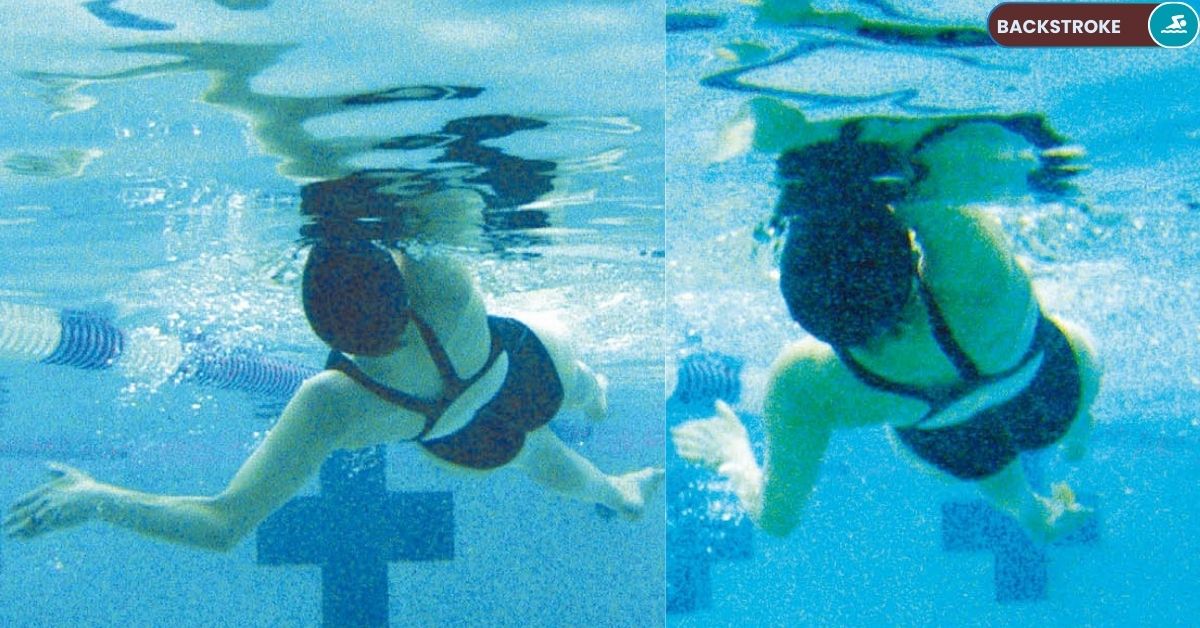
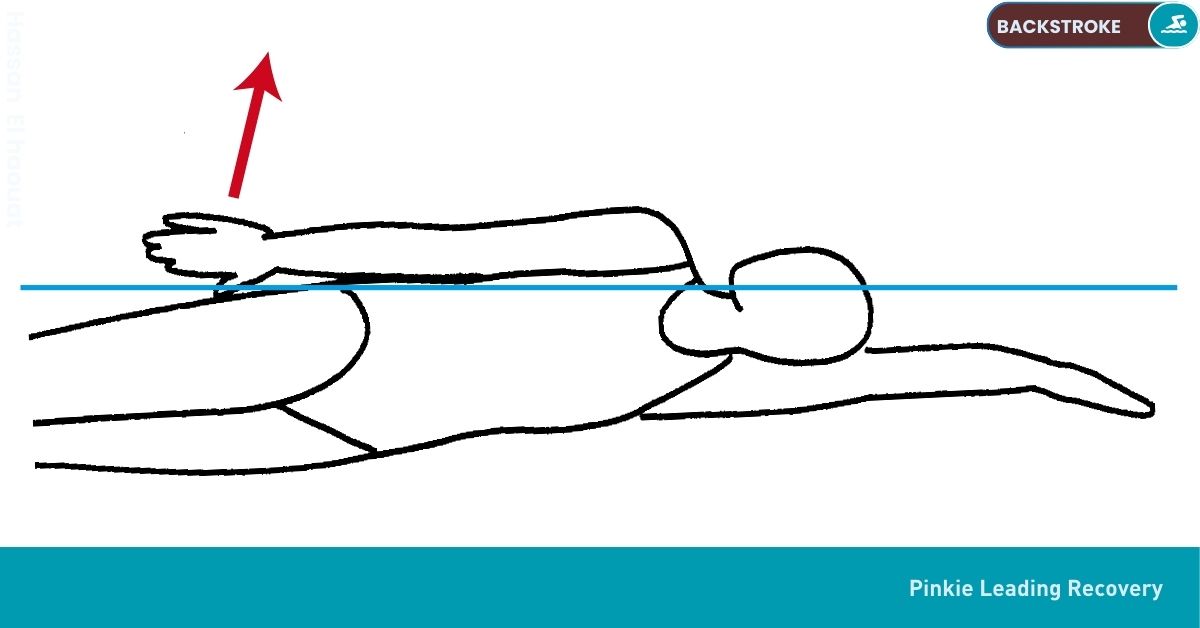
- Drill 48: Pinkie Lead – A specialized coordination exercise designed to reduce drag and prevent shoulder pain. Instead of flipping the hand to a thumb-first exit, swimmers learn to "pop" the shoulder out of the water at the end of the push phase. This naturally positions the pinkie to lead the recovery from start to finish, simplifying the movement and unifying the hip and shoulder action.
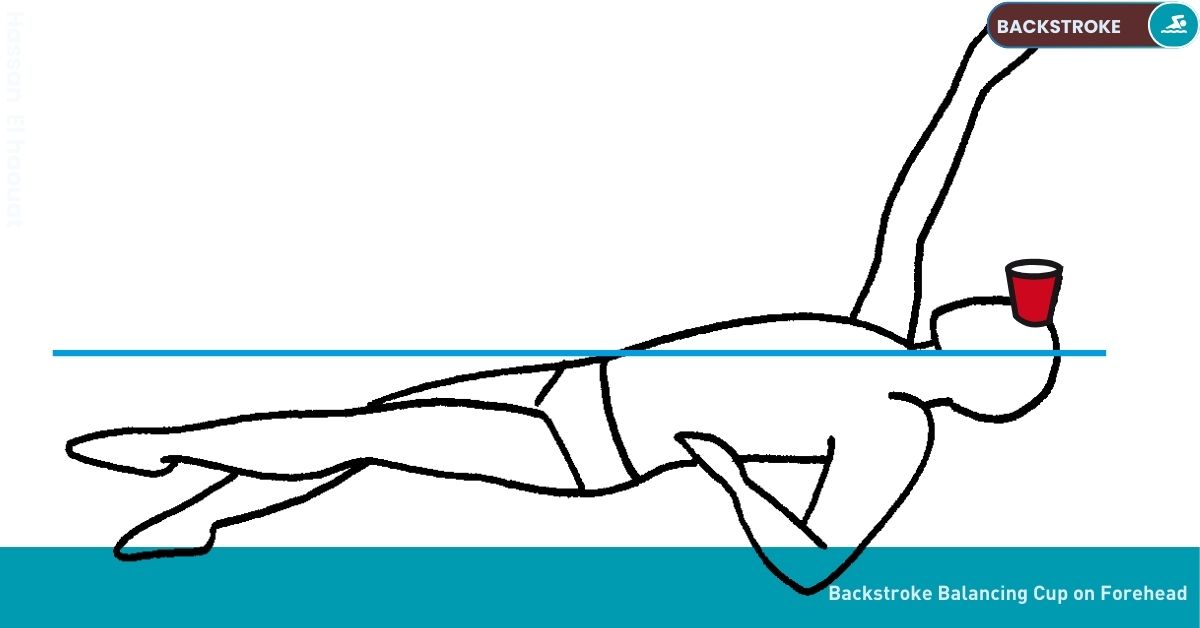
- Drill 49: Backstroke Balance Drill with Cup – The ultimate test of stability. Swimmers balance a cup of water on their forehead while swimming full backstroke. This forces the head to remain a perfectly still anchor while the rest of the body rotates dynamically beneath it, ensuring that none of the core's energy is wasted on lateral "wobble."
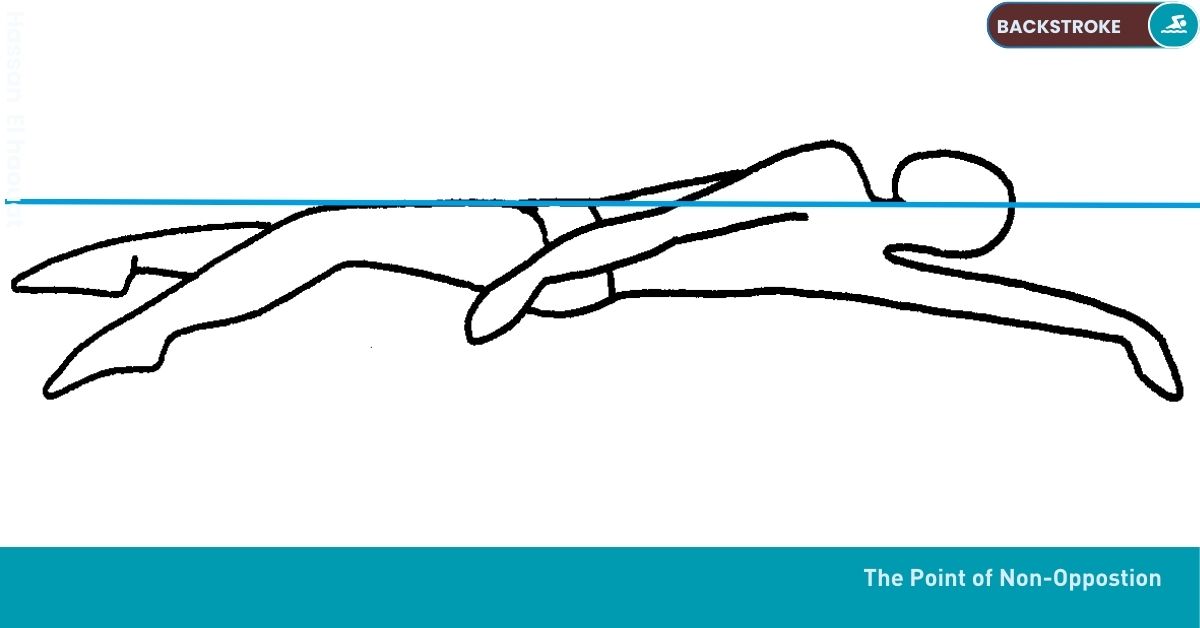
- Drill 50: Opposition Overlap – This drill identifies the "momentary non-opposition point." Swimmers learn that for a brief second, both hands are in the water—one entering to start the pull and the other finishing the push. By coordinating the hip roll to assist both ends of the stroke simultaneously, swimmers access a surge of power that creates a truly continuous and aggressive forward motion.
Backstroke Swimming : - Coordination Drill
Swim Drill - 47 - Roll, Pull, Roll, Push
THE PURPOSE OF THIS DRILL
- Blending the actions of the roll and the arm stroke
- Initiating the arm stroke from the core
- Coordinating backstroke action
HOW TO DO THIS DRILL
- Step 1: Push off the wall on your back, both arms extended, preparing to do the backstroke, straight spine, good water-line, productive kick. Swim to the other end of the pool focusing on identifying the pull phase and the push phase in your backstroke arm stroke.
- Step 2: Swim another length of backstroke, this time focusing on identifying the roll or "switch" from one side of your body to the other.
- Step 3: Now, swim a length of backstroke timing the pull phase of the underwater arm stroke to begin as you "switch" toward the underwater arm. Then, with the same arm, time the push phase of the stroke to begin as you "switch" away from the underwater arm.
- Step 4: Swim several lengths of the pool, focusing on the timing of roll, pull, roll push. Concentrate on one arm at a time. Once coordinated with the first arm, concentrate on the other arm to see if your timing also follows roll, pull, roll push.
- Step 5: Practice until you can increase your stroke rate and still maintain this timing. This is the ideal backstroke coordination.

Backstroke Swimming : - Coordination Drill
Swim Drill - 48 - Pinkie Lead
THE PURPOSE OF THIS DRILL
- Using the hip roll to initiate the recovery
- Eliminating extraneous actions
- Learning to avoid shoulder pain
HOW TO DO THIS DRILL
- Step 1: Push off the wall on your back, both arms extended, preparing to do the backstroke, straight spine, good water-line, productive kick. Swim backstroke to the other end of the pool focusing on your hand at the end of the push phase of the arm stroke, just before recovery. Notice that your thumb is closest to your body as it finishes the push, and the pinkie is to the outside. In this position it is the back of the hand that exits first for recovery, creating a large hole in the water, and lifting heavy water upward into the recovery.
- Step 2: To avoid this, traditionally, most swimmers have been taught to flip their hand to a thumb up position to exit the water, then flip their hand again during recovery to achieve a pinkie first entry at the end of recovery. Although the thumb-lead position avoids more drag than exiting with the back of your hand, it requires the additional action of flipping your hand over and then back again. This action is done independently from the roll, making the arm work harder. In addition, if not done early enough in the recovery, the second hand flip can contribute to shoulder pain. Practice the thumb-first recovery, initiating the flip to pinkie leading before your hand reaches the top of the recovery arch.
- Step 3: The alternative to flipping your hand, before and again during recovery, is to allow your roll to position your hand for recovery. Swim backstroke to the other end of the pool, feeling core stability that unites your shoulders and hips. Focus on your shoulder of the arm that is finishing the push phase of the underwater stroke. As the hand finishes the push, deliberately pop the same side shoulder out of the water just as your hand passes your hip. Notice that as you do this deliberate movement with your shoulder, your same hip will also rise. Practice to the far end of the pool.
- Step 4: Now, swim another length of backstroke, focusing on popping your shoulder out of the water, and allowing your same side hip to rise at the point when your same side your hand is finishing the push. Freeze in that position. Observe that having rolled, it is the pinkie that is positioned to exit the water first for recovery. With the pinkie leading the recovery from start to finish, there is no need to flip the hand over and back, or to make sure the second flip is done early in the recovery to avoid shoulder pain.
- Step 5: Repeat this drill, maintaining unified hip and shoulder action. With each stroke, deliberately pop your shoulder out of the water as your hand finishes the push. Feel your hip rise as your hand is finishing its push. Then, as the hip continues its switch, let it lift your hand out of the water in the same position the hand finished the push, pinkie leading. It is just less work than a thumb-lead recovery.
Backstroke Swimming : - Coordination Drill
Swim Drill - 49 - Backstroke Balance Drill with Cup
THE PURPOSE OF THIS DRILL
- Developing a balanced, effective backstroke
- Developing continuous backstroke motion
- Maintaining a stable head position while swimming backstroke
HOW TO DO THIS DRILL
- Step 1: Fill a medium plastic cup halfway with water. Gently balance the cup on your forehead as you lay on your back in the water, with a straight spine and good water-line. Once the cup is balanced, position both arms extended over your head. Kick productively.
- Step 2: Begin the underwater stroke with one arm, rolling smoothly into the stroke, while your head stays still, centered and neutral. Keep the cup of water balanced on your forehead. When the first arm passes your hip, begin stroking with the other arm. If the cup falls off, stand and start again.
- Step 3: Practice until you can swim smoothly for several strokes without the cup falling off your forehead.
- Step 4: Swim backstroke again, with the cup on your forehead, increasing your stroke and kick rate, and maintaining your stable, neutral head position. Roll smoothly from side to side, and with your hips and shoulders united, While they are opposite, feel the movement of both of your arms initiated at once by a single action of the core. This is ultimate backstroke.
Backstroke Swimming : - Coordination Drill
Swim Drill - 50 - Opposition Overlap
THE PURPOSE OF THIS DRILL
- Recognizing the momentary non-opposition point in the backstroke
- Making the most of both arms pressing on the water at once
- Feeling a continuous stroke
HOW TO DO THIS DRILL
- Step 1: Push off the wall for backstroke, achieving a straight spine, good water-line, and productive kick. Swim backstroke to the other end of the pool. Focus on the opposition of the arm stroke. When one arm is under the water, one arm is over the water. When one arm is in mid-stroke under the water, the other arm is in mid-recovery.
- Step 2: Now focus on the point when one arm is starting the stroke, and the other arm is finishing the stroke. This sounds opposite. As you swim, feel what is really happening. As one arm is entering the water and descending about twelve inches downward, the other arm is still pushing past the hip. Both arms are in the water at the same time. Both are in the power phase of the stroke at the same time. For a moment, the arms are actually not opposite.
- Step 3: Continue swimming backstroke, feeling this moment of overlap. Feel how the roll of the stroke assists both arms, one to start the arm stroke, the other to finish the arm stroke. Use this moment to start your stroke with power, and to finish your stroke with power. Practice more until you can feel both arms engaged in the power phase of the stroke at the same time, at opposite ends of the stroke.
- Step 4: Kick to assist both the beginning and the end of the stroke. Feel the balance of the stroke shift from the finishing arm to the starting arm. Opposition is reset as the beginning arm sweeps into its anchored position at the same time as the other arm clears the water. Practice for several lengths of the pool. Develop a continuous stroke, using the moment of stroke overlap to access more power than with one arm at a time.