The following set of exercises focuses on Freestyle Leverage, a concept that shifts the source of swimming power from the shoulders and arms to the body’s core. In efficient swimming, the limbs act as extensions of the torso, utilizing the rotation of the hips to generate momentum. These drills—ranging from the rhythmic pauses of the "Three Stroke Switch" to the weight-shifting imagery of "Hip Skating"—are designed to help swimmers access their largest muscle groups. By mastering the timing of the hip roll, athletes can achieve a longer, more powerful stroke that requires less effort while covering more distance.
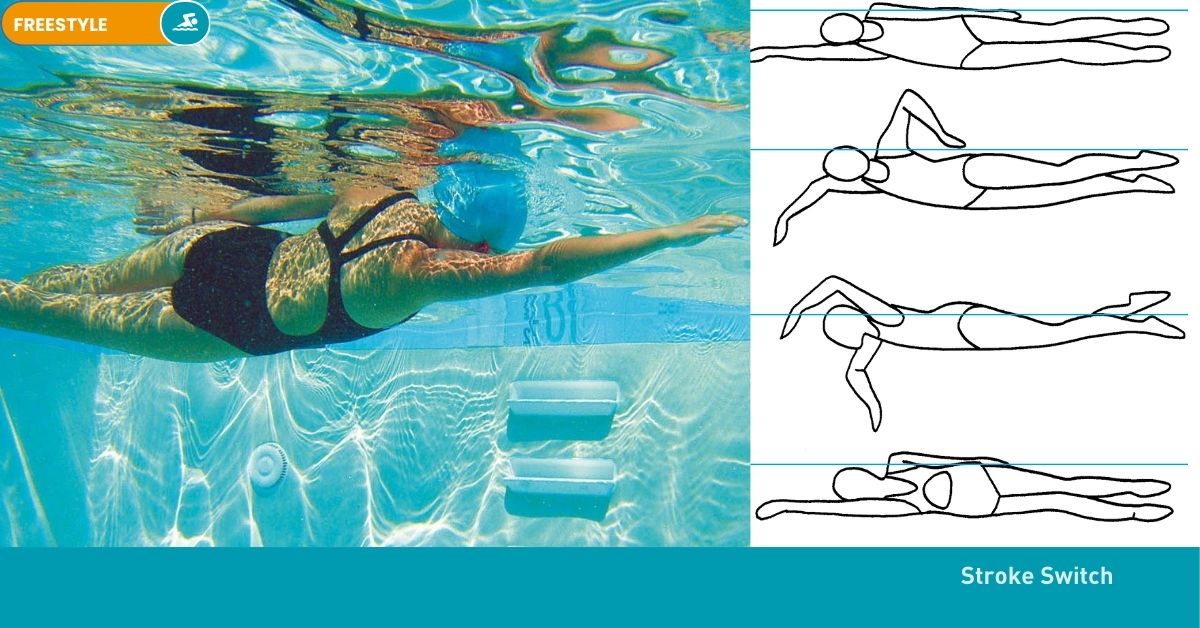
- Drill 19: Three Stroke Switch Freestyle – This drill uses a "3 strokes, 6 kicks" rhythm to practice the transition between a flat and side-lying position. It emphasizes using the hip roll to provide leverage for both the recovering arm and the leading stroke. By pausing on the side, swimmers learn to stabilize their core before "switching" power to the other side.
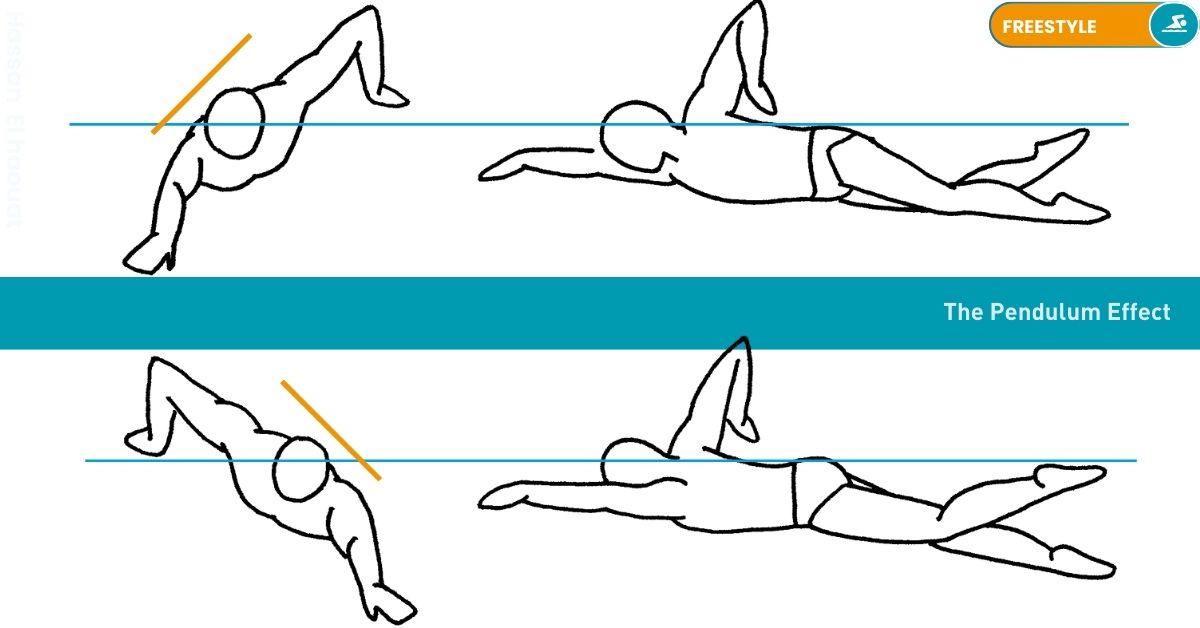
- Drill 20: The Pendulum Effect – This exercise highlights the relationship between the underwater pull and the overwater recovery. By holding a "shark fin" position and then switching sides, swimmers feel how motion gathers speed like a swinging pendulum. It teaches that while there are moments in the stroke where neither arm is active, the momentum generated by the hip switch keeps the body moving forward.
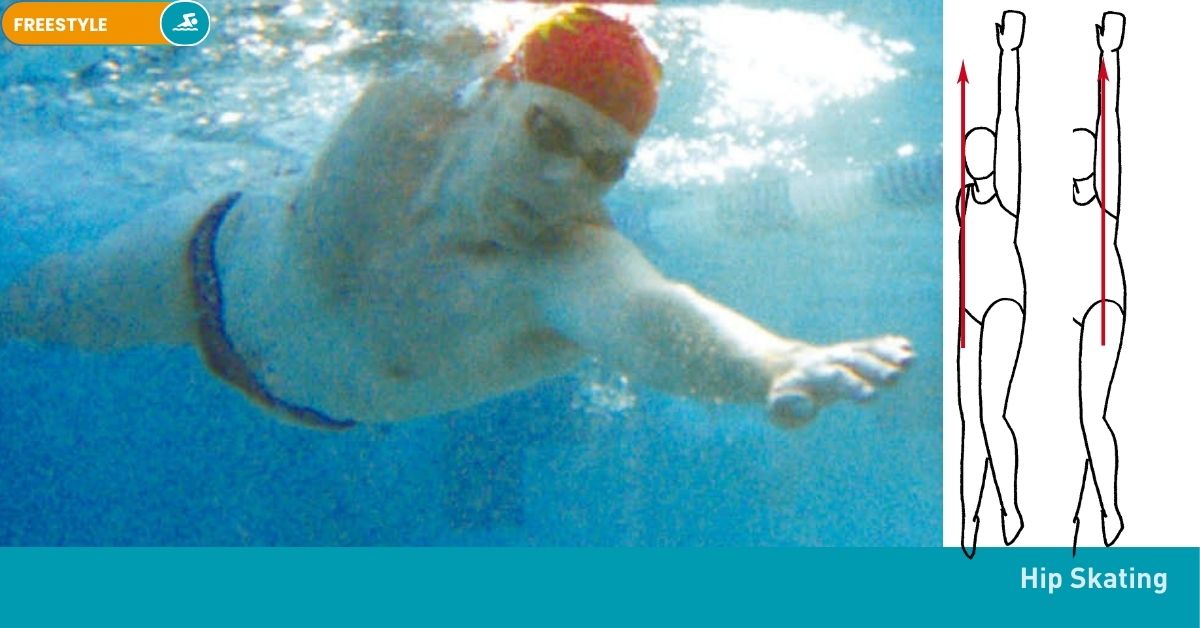
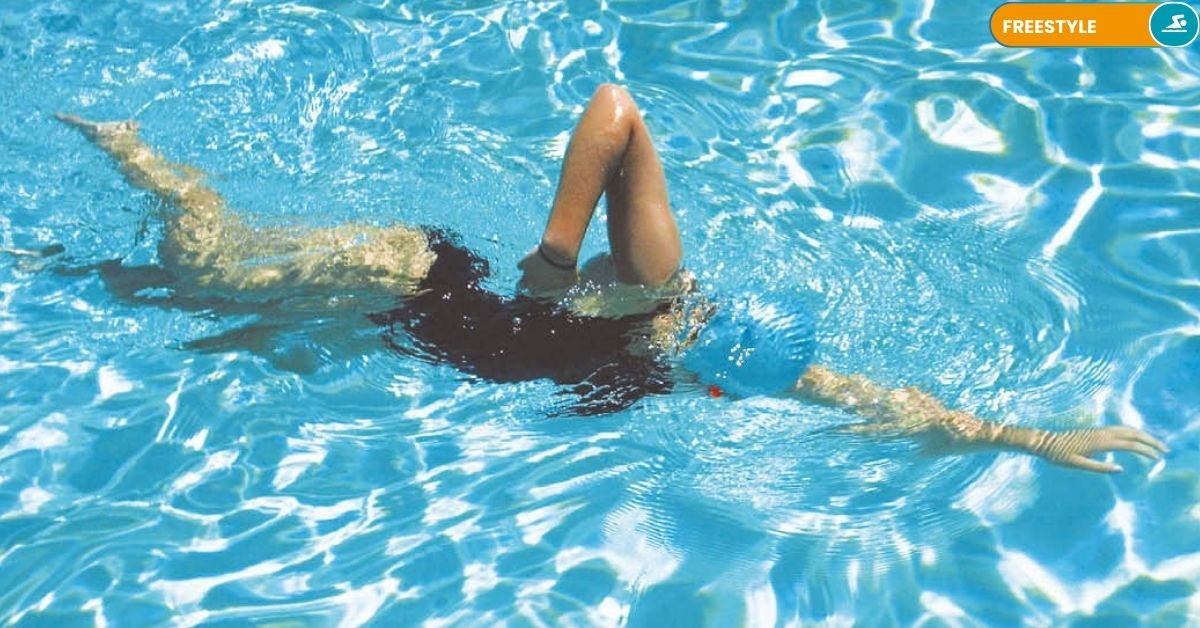
- Drill 21: Hip Skating – Utilizing the imagery of an ice skater, this drill focuses on weight transfer. Swimmers imagine skates on their pelvic bones and practice shifting their weight from one hip to the other with every stroke. This creates a "downhill" gliding sensation, proving that true power in freestyle comes from the core driving the limbs, rather than the arms pulling the body.
FreeStyle : - Leverage Drill
Swim Drill - 19 - Three Stroke Switch Freestyle
THE PURPOSE OF THIS DRILL
Practicing the roll into and out of the stroke
Accessing your core strength
Transferring power from the core to the limbs
HOW TO DO THIS DRILL
Step 1: Push off the wall preparing to do freestyle, core engaged, perform three freestyle strokes (one arm = one stroke), accompanied by a productive flutter kick. As your arm approaches your hip on the third stroke, roll onto your side and float and kick with the arm that just finished stroking at your side, the other arm fully extended. The arm at your side should be closer to the surface, and the arm lower in the water should be extended over your head. Holding this position, do six good kicks (one leg = one kick).
Step 2: With your sixth kick, roll your higher hip and shoulder down into the water as the arm at your side recovers over the water to the front, and the reaching arm begins stroking. Do three more freestyle strokes. Continue kicking the through the whole process. Breathing should be done to the side during the three strokes. During the kick-only phase, the face should remain mostly submerged, ear against the lower shoulder.
Step 3: Continue doing three strokes, kicking the whole time, and then six more kicks in the side position until you reach the far end of the pool.
Notice that when changing from the side kicking phase to the stroking phase, the recovering arm travels easily to the front with leverage of the hip roll. Notice too, at the same time, that the leading arm goes easily into the next stroke, also aided by the hip roll.
Step 4: Keep practicing. Once you are comfortable with the 3 strokes and 6 kicks rhythm, change to 3 strokes and 3 kicks. Then, work on incorporating a "switch" between each stroke. Notice that what you are doing is almost identical to regular freestyle...a very long, efficient freestyle.
Step 5: Once you are able to roll with each stroke, begin swimming regular freestyle rolling into and out of each stroke, as you did in the drill.
FreeStyle : - Leverage Drill
Swim Drill - 20 - The Pendulum Effect
THE PURPOSE OF THIS DRILL
Understanding the relationship between the recovering arm and the stroking arm
Feeling acceleration during the switch
Maintaining balance
HOW TO DO THIS DRILL
Step 1: Float in the water on your side, the arm near the surface at your side, and the other arm extended in front. Kick productively. Slide the hand at your side up to your waist, raising your elbow up to a point, like in the Shark Fin drill. To breathe, maintain your core stability and roll towards your back, breathe, then roll back to your original side position.
Step 2: Hold this position for five seconds, continuing to kick. Notice that at in this position, on your side with one arm extended, and the other arm at its highest point in recovery, neither arm is producing any forward motion.
Step 3: Stroke through with your extended arm as you finish your recovery with arm over the water. Find the same floating position on the other side. Your lower arm should be extended, and your higher arm should be making a shark fin. Again hold for five seconds, continuing to kick.
Step 4: Switch to the other side again. Continue to the far end of the pool, switching to the identical position with your arms on either side, and holding for five seconds before switching. Notice that as you switch arm positions, your hips switch sides too. Notice too that each switch gathers speed from beginning to end.
Step 5: Do another length, this time holding only for three seconds before switching sides. Feel the beginning and the end of each switch. Like the extremes of a pendulum's swing, the motion starts slowly and gathers speed, continuously from side to side.
Step 6: Do another length, this time holding for only one second before switching sides. Feel the pendulum swing and gather speed with each switch. Notice that while one arm reaching and the other out of the water in recovery, neither arm is moving you forward, yet you are still moving forward.
Step 7: Continue to practice, feeling the pendulum effect with each stroke. Focus on using your hips to add power to the switch of your arm positions. Feel your stroke cover more distance with no more effort.
FreeStyle : - Leverage Drill
Swim Drill - 21 - Hip Skating
THE PURPOSE OF THIS DRILL
Observing the role of the hips
Learning to use leverage from the core
Mastering switching from hip to hip
HOW TO DO THIS DRILL
Step 1: The rhythm of ice skating resembles the rhythm of swimming freestyle. As one side of the body balances, the other is applying force. To go faster, the ice skater does not do shorter, choppier movements. Instead, each stride is extended, using leverage from the hips to produce motion. Try it. Attach an imaginary ice skate to each of your hips on the bone you can feel at the highest and forward most points of your pelvis.
Step 2: Now, push off the wall, face down in the water, preparing to do freestyle, firm core, aligned, floating "downhill". Glide forward on the imaginary hip skates. As you get ready to take your first stroke with your right arm, shift your weight toward your right hip, so you are balancing on that skate only, then start the stroke. As the right arm approaches the end of the stroke, switch your weight to your left hip skate, allowing the right hip to rise, while the left arm starts its stroke, and the right arm recovers.
Step 3: Continue skating on your hips, right, then left, then right, then left. Notice how shifting your weight from skate to skate sends power upward through your core to your arm stroke.